Quick Access to the Diverse Avifauna of the
Humid Puna & Northern Yungas
Tour Schedule
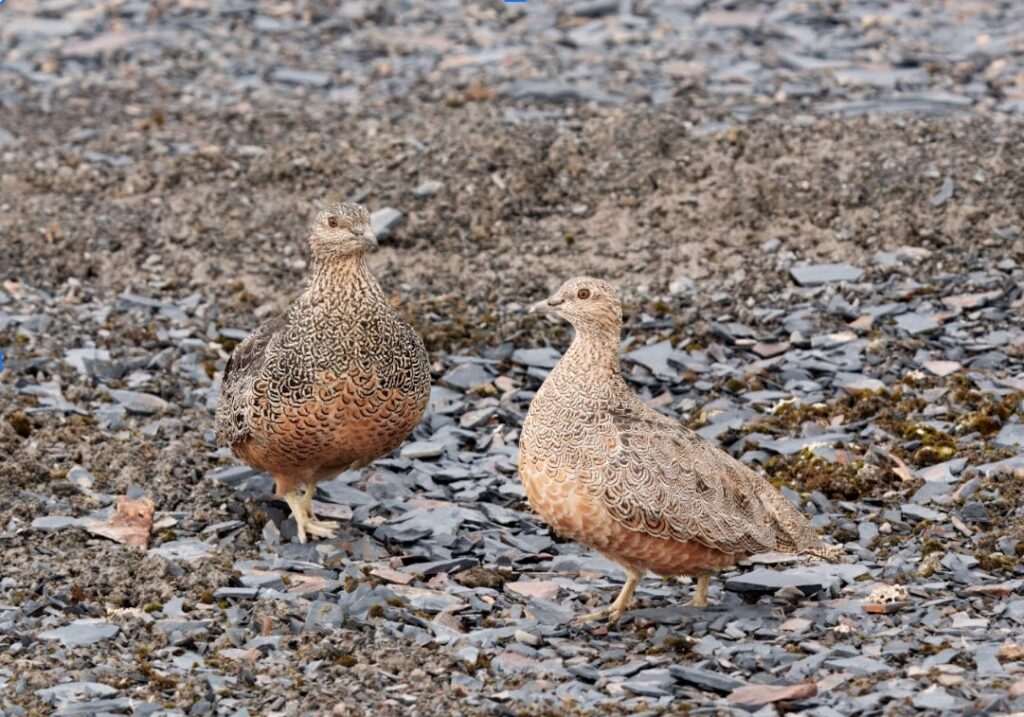
Rufous-bellied Seedsnipe by Hugo Santa Cruz
After departing La Paz early in the morning, we begin birdwatching at 4,700 meters (15,400 feet) above sea level, in the frigid high-Andean climate. During the first hours, we explore wetlands, lagoons, and native shrublands that shelter bird species specially adapted to life in the heights of the Andes.
Later, we descend into a dramatically different landscape. About 20 km farther on, we reach the legendary Death Road, a narrow mountain road that drops abruptly to 1,200 meters (3,950 feet) in just 30 km. Its name dates back to the 1990s, before the construction of the new highway to Coroico, when this route recorded one of the highest annual death tolls from vehicle accidents in the world.
In only a few kilometers, we transition from the dense fog of the cloud forest to the warmth of the rainforest within Cotapata National Park, part of the Yungas of La Paz.
Targets at the Puna: Giant Coot, Rufous-bellied and Gray-breasted Seedsnipe, Golden-spotted Ground-Dove, Slender-billed Miner, White-fronted, Cinnamon-bellied, and White-browed Ground Tyrants, Glacier Finch, and Plumbeus Sierra-Finch.
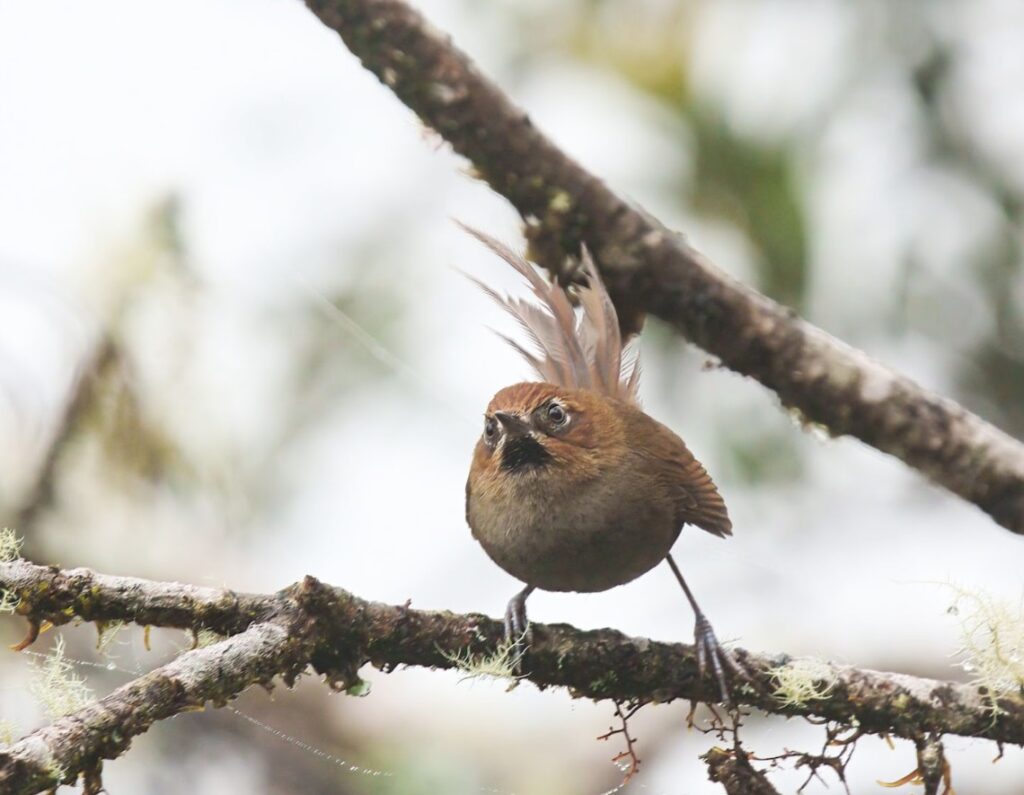
At Los Yungas: Great Sapphirewing, Greenish Puffleg, Collared Inca, Booted Racket-tail, Long-tailed Sylph, Blue-mantled Thornbill, Montane Foliage-gleaner, Fulvous Wren, Andean Solitaire, White-banded and Buff-banded Tyrannulets, Brown-backed Chat-Tyrant, White-browed Conebill, Hazel-fronted Pygmy-Tyrant, Scimitar-winged Piha, Diademed Tapaculo, Orange-browed, Superciliaried, Black-eared and Three-striped Hemispinguses, Golden-collared Tanager, Orange-bellied Euphonia, Moustached Flower-piercer, Swallow Tanager, and Citrine Warbler.