
18 + 7 Days - Birding Adventures & Cultural Heritage
Bolivia: Birding Adventures & Cultural Heritage (18D+7D)
Bolivia remains one of South America’s most authentic and least-visited destinations, a country filled with extraordinary landscapes, living cultures, and countless natural wonders still waiting to be discovered. Often associated with its Andean heritage and the descendants of the Inca civilization, Bolivia, in fact, offers remarkable diversity that extends well beyond the high Andes.
Within its borders lie twelve distinct ecoregions, ranging from lowland forests at just 330 feet above sea level to towering Andean peaks rising above 23,300 feet. Nearly 25% of the national territory is protected, encompassing vast national parks—some larger than entire European countries. This extraordinary range of ecosystems supports an exceptional variety of wildlife and habitats found nowhere else on Earth.
Bolivia is also a country of deep cultural richness. It is home to 36 Indigenous groups, many of whom continue to preserve their languages, traditions, and ways of life with remarkable authenticity.
Our program “Bolivia: Birding Adventures & Cultural Heritage” explores several of the country’s most fascinating regions, including the Chiquitania, Southern Yungas, Northern Yungas, Inter-Andean Dry Valleys, Chaco Serrano, Dry Puna, and Humid Puna. Along the way, travelers encounter both natural and cultural highlights that reveal the full diversity of the country.
Cultural experiences include the mysterious El Fuerte de Samaipata, the vibrant Tarabuco Indigenous Market, the historic colonial city of Potosí, and the dynamic high-altitude capital of La Paz.
Natural highlights are equally remarkable. Visitors explore the habitat of the critically endangered and endemic Red-fronted Macaw in its conservation reserve, the surreal landscapes and colorful lagoons of the Eduardo Avaroa Andean Fauna National Reserve, the immense salt flats of the Salar de Uyuni, the legendary Yungas Road within Cotapata National Park, and the incomparable biodiversity of Madidi National Park, widely recognized as the national park with the greatest bird diversity on Earth.
These landscapes, cultures, and wildlife create an unforgettable journey through one of the most diverse countries on the planet—an invitation to discover Bolivia beyond the expected and to experience a destination where nature, culture, and exploration meet in a truly remarkable way.
Trip Summary
| BOLIVIA: BIRDING & CULTURE | |||
| Bolivia: Birding Adventures and Cultural Heritage (18D/17N) | |||
| Day # | Itinerary | Remarks | Overnight |
| 1 | Arrival in Santa Cruz City. Birding at Viru Viru if time allows. Welcome dinner. | Transfers. Casual birding. (D) | Santa Cruz |
| 2 | City tour. Birding at Bioparque Guembe, and Botanical Garden | Birding & Cultural activities. (B,L,D) | Santa Cruz |
| 3 | Santa Cruz-Samaipata drive Visit: El Fuerte de Samaipata – Inca Ruins & the Hummingbird Garden | Birding & Cultural activities. (B,L,D) | Samaipata |
| 4 | Birding at the Tucuman Parrot Reserve. Visit to the local market, main square & museum | Birding & Cultural activities. (B,L,D) | Samaipata |
| 5 | Samaipata-Pereta drive. Roadside birding | Transfer & Birding day (B,L,D) | Perereta, Red-fronted Macaw Reserve |
| 6 | Birding at Red-fronted Macaw Reserve. Visit the Yampara Ruins (optional) | No driving today. Birding & Cultural activities. (B,L,D) | Perereta, Red-fronted Macaw Reserve |
| 7 | Red-fronted Macaw Reserve – Sucre drive. City tour in Sucre. | Transfer & Cultural activities (B,L,D) | Sucre |
| 8 | Drive from Sucre to Tarabuco and back. Visit the Sunday Market & Jatun Yampara. | Mainly Cultural activities, but little birding. (B,L,D) | Sucre |
| 9 | Sucre-Potosí drive. City tour in Potosí, museums & more. | Mainly Cultural activities, but little birding. (B,L,D) | Potosí |
| 10 | Potosí-Uyuni drive. Visit Pulacayo | Birding & Cultural activities. (B,L,D) | Uyuni |
| 11 | Birding at Turquiri and Pastos Grandes Lagoons, Visit Villa Alota | Transfer, Birding & Nature activities. (B,L,D) | Eduardo Abaroa Nature Reserve |
| 12 | Birding at Hedionda, Cachi & Kara Lagoons. Visit Siloli Desert | Transfer, Birding & Nature activities. (B,L,D) | Eduardo Abaroa Nature Reserve |
| 13 | Birding at Colorada Lagoon | Birding & Nature activities. (B,L,D) | Uyuni |
| 14 | Visit Uyuni Salt Flats & Inca Huasi Island | Nature activities & little birding. (B,L,D) | Uyuni |
| 15 | Uyuni-La Paz Flight. La Paz City tour by cable car | Transfer & Cultural activities (B,L,D) | La Paz |
| 16 | Birding at Titicaca Lake. Visit Tiwanaku Ruins | Birding & Cultural activities. (B,L,D) | La Paz |
| 17 | Birding at Cotapata National Park | Birding day (B,L,D) | La Paz |
| 18 | Transfers to the airport. | End of our services. (B) | Not included |
| Madidi National Park & Pampas del Yacuma Extension (7D/6N) | |||
| Day # | Itinerary | Remarks | Overnight |
| 18 | La Paz-Rurrenabaque Flight. Transfer to Chalalan Ecolodge by boat. | Transfer. Birding & Nature activities. (B,L,D) | Madidi National Park at Chalalán Ecolodge |
| 19 | Wildlife watching at Madidi National Park | Birding & Nature activities. (B,L,D) | Madidi National Park at Chalalán Ecolodge |
| 20 | Visit San José de Uchupiamonas Indegenous Community | Nature & Cultural activities (B,L,D) | Madidi National Park at Chalalán Ecolodge |
| 21 | Chalalan Ecolodge – Rurrenabaque transfer by boat | Transfer (B,L,D) | Rurrenabaque |
| 22 | Birding at Pampas del Yacuma Reserve | Birding & Nature activities. (B,L,D) | Rurrenabaque |
| 23 | Rurrenabaque-La Paz Flight. Visit the Moon Valley. Farewell Dinner. | Transfer, Birding & Nature activities. (B,L,D) | La Paz |
| 24 | Transfers to the airport. | End of our services. (B) | Not included |
Tour Route Map
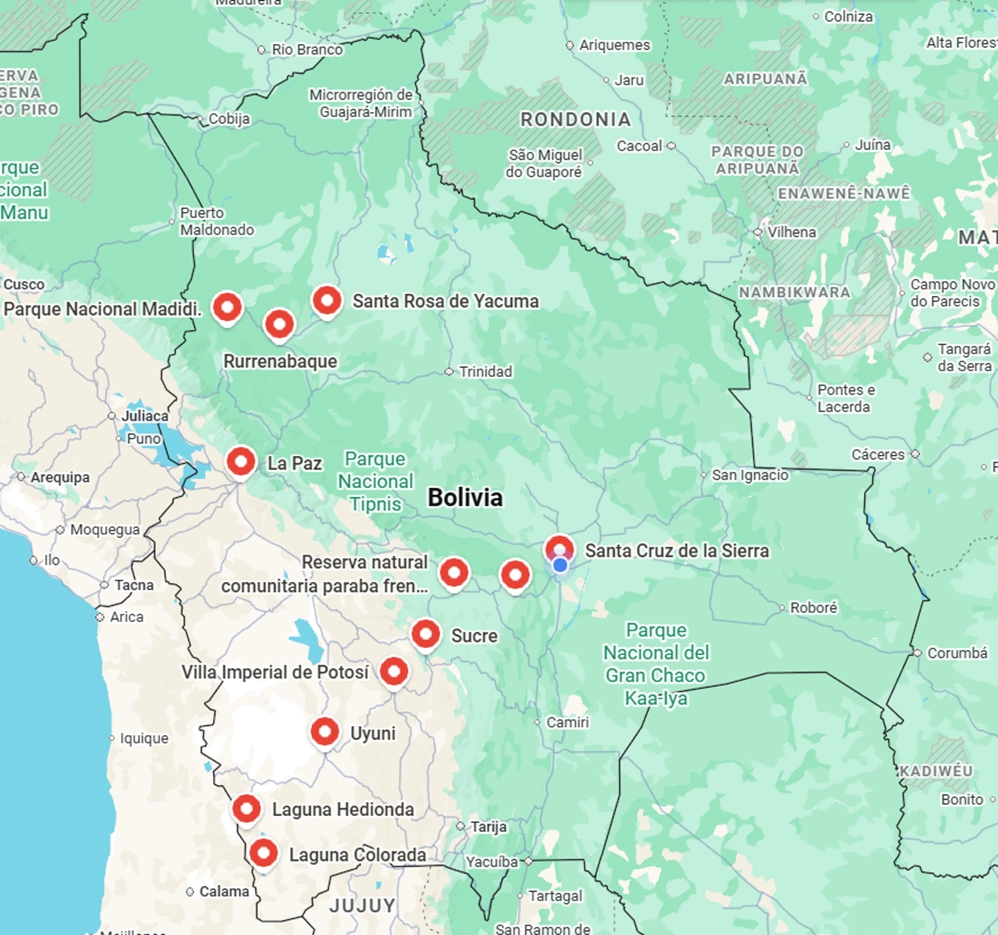
This tour begins in Santa Cruz de la Sierra and finishes in La Paz. The full itinerary spans 24 days, with the last 7 days available as an optional extension.
Detailed day-by-day itinerary
Day 1
Arrive today at your leisure. Flights reach Viru Viru Airport in Santa Cruz de la Sierra throughout the day.
Santa Cruz de la Sierra is Bolivia’s largest and most dynamic city, set in the tropical lowlands of eastern Bolivia. It is a gateway to the Chiquitania, Chaco, and Amazonian ecosystems, blending modern growth with rich natural and cultural diversity.
Depending on flight schedules and time permitting, we may do some casual birding near the airport after picking you up.
The group will officially meet this evening for a welcome dinner.
Overnight in Santa Cruz.
Day 2
We begin the day in the historic center of Santa Cruz, visiting 24 de Septiembre Square, the Cathedral Basilica of San Lorenzo, and nearby museums. We then head to Biocentro Guembe, a private nature park on the city’s outskirts with a large aviary of rescued birds, a butterfly house, and exhibits of reptiles and mammals. Macaws, toucans, parakeets, tanagers, flycatchers, and monkeys can be seen both in captivity and in the wild. We will enjoy lunch at the park’s excellent restaurant.
In the afternoon, we visit the Botanical Garden, a 220-hectare forest within the city that represents the Chiquitano Dry Forest. This urban refuge supports abundant wildlife, including several monkey species, as well as sloths, capybaras, caimans, and turtles. It is also an excellent birding site, with species such as Bare-faced Ibis, Ringed Kingfisher, Bolivian Slaty-Antshrike, Yellow-tufted Woodpecker, and Amazonian Motmot.
Overnight in Santa Cruz.
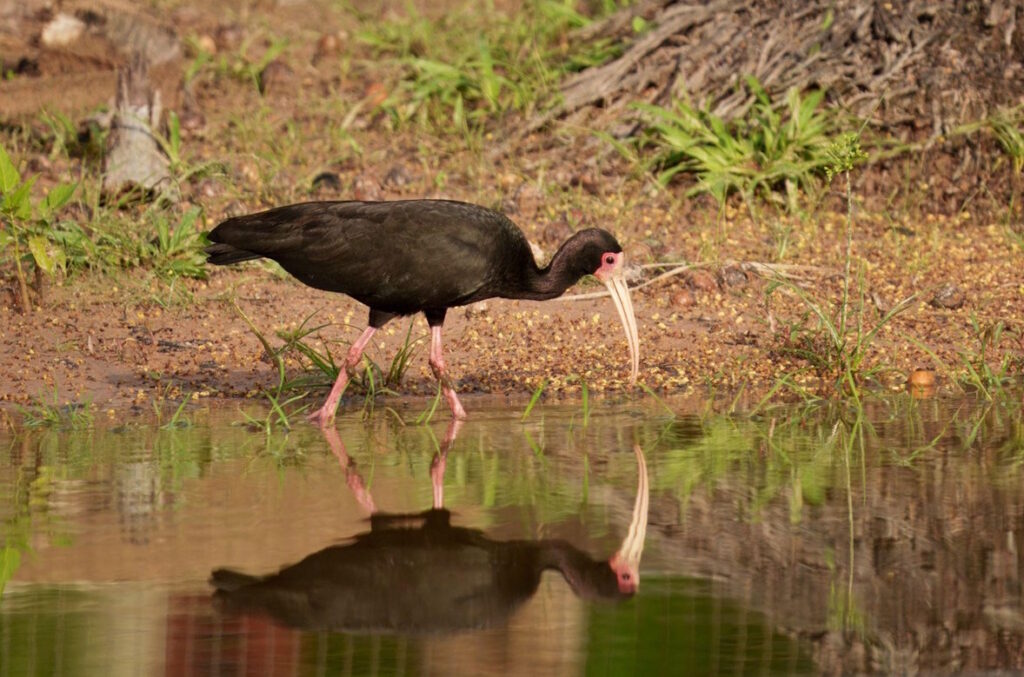
Bare-faced Ibis by Hugo Santa Cruz
Day 3
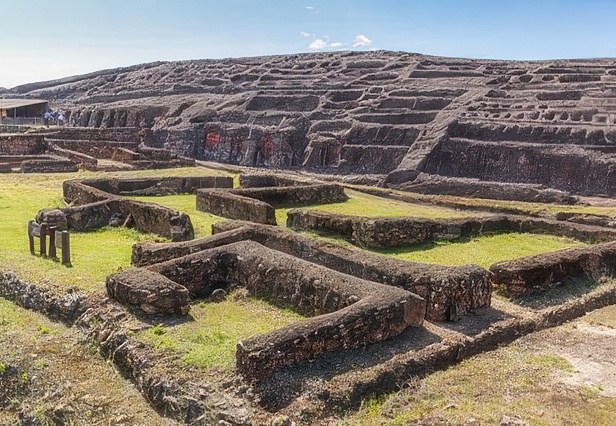
Fuerte de Samaipata by Alejandra Quitón
Today, we travel to Samaipata, a picturesque town rich in culture. In the morning, we visit El Fuerte de Samaipata, an important archaeological site and UNESCO World Heritage Site, featuring a massive carved rock with pre-Columbian ceremonial and astronomical engravings that reflect the overlap of Amazonian, Andean, and Inca influences in the eastern Andes of Bolivia.
In the afternoon, we visit Refugio de los Colibríes, a small but outstanding birding hotspot located in an ecotone between the Inter-Andean Dry Valleys and the Chaco Serrano. The site is ideal for observing and photographing hummingbirds such as White-bellied Hummingbird, Fork-tailed Woodnymph, Planalto Hermit, and White-vented Violetear, as well as other species, including Rusty Flowerpiercer, Sooty-fronted Spinetail, Variable Antshrike, Ocellated Piculet, Large-tailed Dove, and Green-winged Saltator.
Overnight in Samaipata.
Day 4
At the latitude of Samaipata, the Yungas divide into the Northern and Southern Yungas, allowing us to explore both distinct ecoregions, each with its own vegetation and ecological characteristics.
In the morning, we visit the Tucumán Parrot Reserve in the southern zone, already influenced by subtropical conditions. This area receives slightly less rainfall than the northern Yungas. It is characterized by distinctive tree species such as mountain pine (Podocarpus sp.) and alder (Alnus sp.), which create specialized habitats. A key highlight is the Tucumán Amazon (Amazona tucumana), a species restricted to this ecoregion. Other birds found here include Brown Tinamou, Yungas Guan, White-throated Antpitta, Green-cheeked Parakeet, Cream-backed Woodcreeper, Red-tailed Comet, Black-capped and Black-and-chestnut Warbling Finch, and Mottled-cheeked Tyrannulet.
In the afternoon, we visit the museum, local market, and main square, where you can appreciate the cultural diversity of this small town, home to residents from more than 40 nationalities.
Overnight in Samaipata.
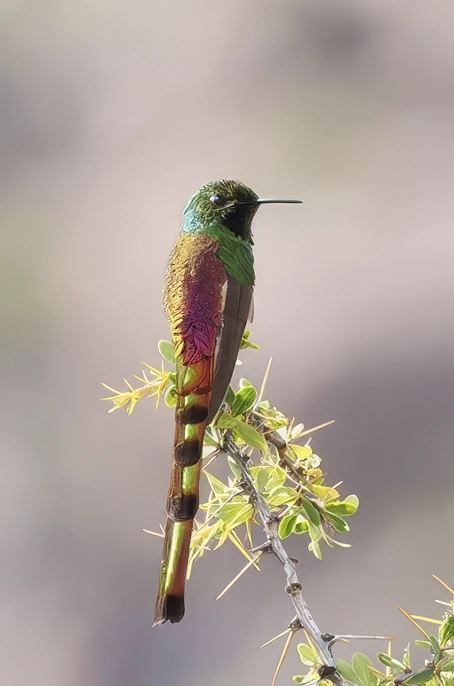
Red-tailed Comet by Hugo Santa Cruz
Day 5
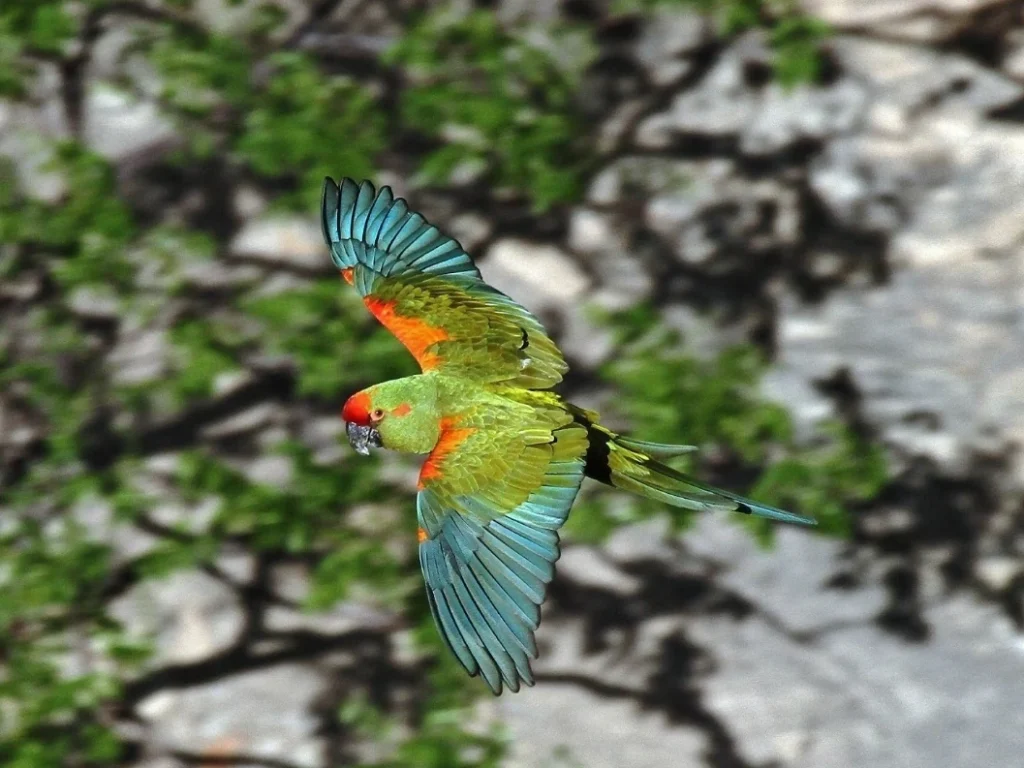
Red-fronted Macaw by Richard Greenhalgh
Today we have a long journey as we travel to the Red-fronted Macaw Reserve, passing through the Inter-Andean Dry Valleys and the Chaco Serrano. Most birding will be done from the road, with several strategic stops at key ornithological sites.
We cross mid-elevation zones between 1,500 and 2,500 m a.s.l. (5,000–8,200 ft), in a dry climate characterized by open, arid-adapted vegetation. Highlights along the route include a small canyon, the Jardín de las Cactáceas area, and Laguna Pailones, all rich in flora and fauna, before ending the day at the Red-fronted Macaw Lodge.
Possible bird species along the route include Andean Condor, Bolivian Earthcreeper, Stripe-crowned Spinetail, Rufous-capped Antshrike, Black-and-chestnut Warbling Finch, Band-tailed Sierra Finch, Green-barred Woodpecker, Ultramarine Grosbeak, and Moss-backed Sparrow.
Overnight at Red-fronted Macaw Lodge, Perereta.
Day 6
Today is a more relaxed day. We wake up in the heart of one of the country’s most renowned birding hotspots, with no need for long vehicle journeys. The Red-fronted Macaw Reserve is a community-managed protected area located at 1,500 m a.s.l. (5,000 ft), along the banks of the Mizque River in the Inter-Andean Dry Valleys.
Directly in front of the ecolodge, across the river, rises an impressive cliff where the endemic Red-fronted Macaw nests. This species, along with many others, can be comfortably observed from the lodge garden. Throughout the day, we explore the surroundings of the lodge, focusing on endemic species and other regional specialties such as Black-chested Buzzard-Eagle, Cliff Parakeet (endemic), Spot-backed Puffbird, Striped Woodpecker,
White-tipped Plantcutter, White-crested Tyrannulet, Ringed Warbling Finch, Grey-crested Finch, and the endemic Bolivian Blackbird (endemic).
Overnight at Red-fronted Macaw Lodge, Perereta.
Day 7
In the afternoon, we stroll through the city, visiting the House of Freedom, the ASUR Museum, the Convent of San Felipe de Neri, and Bolívar Park. The day is dedicated primarily to learning about Bolivia’s history.
And that’s not all—this evening we celebrate with a folkloric dinner show, where we will enjoy local cuisine and experience traditional Bolivian music, dances, and culture.
Overnight in Sucre.
Day 8
We continue our adventure toward Bolivia’s capital—no, not La Paz, but Sucre. While the seat of government is in La Paz, Sucre is the constitutional capital of the country.
Sucre is a peaceful city that warmly welcomes visitors, known for its well-preserved colonial architecture and whitewashed buildings. The city offers a relaxed atmosphere and rich historical heritage, recognized as a UNESCO World Heritage Site.
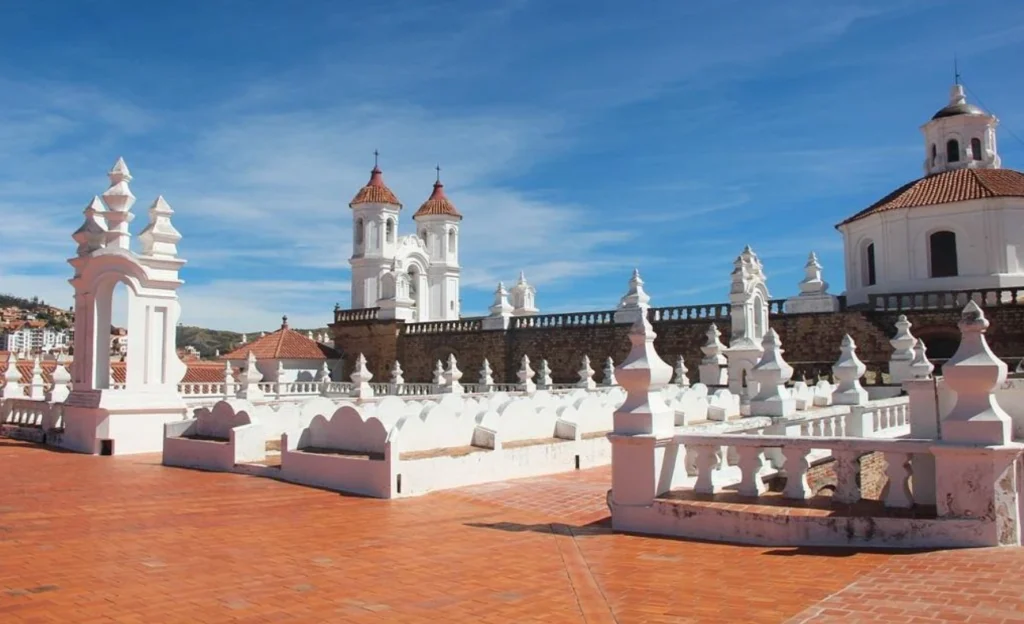
Oratorio de San Felipe de Neri by Salvador G. Prada

Tarabuco fabric by A. Quitón
In the morning, we visit Tarabuco, a charming Yampará village renowned for its Sunday Market. The town is famous for some of the most distinctive textiles in Bolivia. Strolling through the market offers the opportunity to purchase tapestries, bags, and shawls, while also observing the Yampará people in their striking traditional attire, including leather monteras, multicolored hand-woven ponchos, and small bags known as chuspas used to carry coca leaves. The market is entirely authentic and vividly reflects Bolivia’s rich, living cultural heritage.
On the way back to Sucre, we may optionally stop in the Yotala area for some birding or simply spend more time enjoying the city.
Overnight in Sucre.
Day 9
We could not leave Sucre without visiting the Chocolate Museum, where we would learn about the history of this delicacy in Bolivia and around the world while enjoying its flavors and aromas.
We then continue our journey to Potosí, one of the highest cities in the world and a UNESCO World Heritage Site. Potosí is a historic Andean city, famous for Cerro Rico, once one of the richest silver mines in the world. Its well-preserved colonial architecture reflects its central role in shaping the history of Bolivia and South America.
In the afternoon, we visit 10 de Noviembre Square, the Church of San Francisco, the historic center, and the National Mint (Casa Nacional de Moneda). Time seems to have stood still in this city, and walking through its streets feels like traveling back in time.
Overnight in Potosí.
Day 10
Today we travel to the town of Uyuni, famous as the gateway to the world’s largest salt flat. It is a long journey, so we will make several strategic stops along the way to look for birds and appreciate the vast Altiplano landscapes.
The high Andean mountains seem to fade into infinity, and despite the cold climate, life thrives—especially in the wetlands and high-Andean bogs (bofedales) encountered along the route. We then visit the ghost town of Pulacayo, once home to one of Bolivia’s largest silver mines and now part of a UNESCO World Heritage Site. The Pulacayo Mine still preserves a locomotive that was once robbed by the infamous American outlaws Butch Cassidy and the Sundance Kid.
Overnight in Uyuni.
Day 11
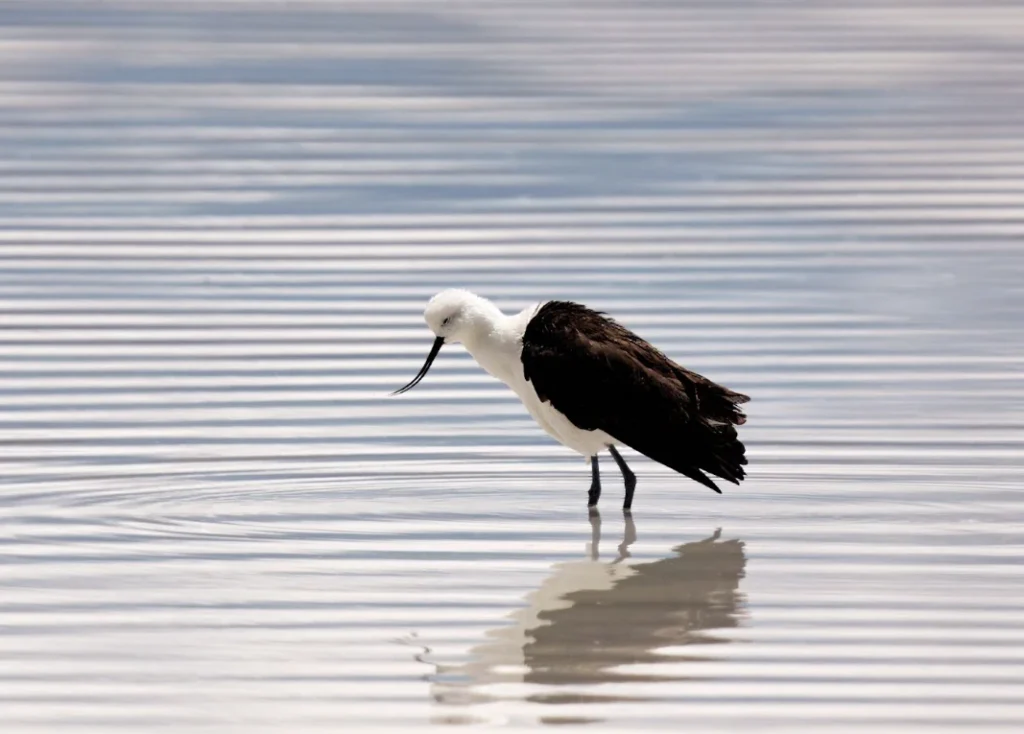
Andean Avocet by Hugo Santa Cruz
The Bolivian Altiplano on this side of the Andes is a high-elevation ecosystem of global significance and one of the most exceptional landscapes on Earth. Shaped by extreme aridity, intense solar radiation, and wide daily temperature fluctuations, the region supports a surprising diversity of ecosystems and species adapted to these harsh conditions. From hypersaline salt flats and dormant volcanoes to nutrient-rich wetlands and vividly colored lagoons, the Altiplano is both ecologically and geologically remarkable.
This region forms a mosaic of unique landscapes, offering surreal scenery of extraordinary beauty. In southern Bolivia, the Puna is notably drier, which explains the extensive presence of salt flats. Despite the harsh environment, bofedales and lagoons are also present and form an important part of today’s route.
Today we visit the Villa Alota bogs, where it is possible to observe species such as Puna Miner, Rufous-banded Miner, Plumbeous Sierra Finch, Red-backed Sierra Finch, Black Siskin, Greenish Yellow-Finch, and Golden-spotted Ground Dove. We then pass through the lagoons of Turquiri and Pastos Grandes, where we may find Giant Coot, Andean Avocet, Andean and James’s Flamingos, Andean Negrito, and White-winged Cinclodes.
Overnight at Laguna Hedionda.
Day 12
We begin the day at one of the most beautiful lagoons along the circuit, Laguna Hedionda, a mineral-rich lake with high sulfur content, which explains both its distinctive smell and its name.
Throughout the day, we explore several lagoons, including Cachi and Kara, each with unique features and striking colors. We also visit the Siloli Desert, famous for its wind-carved rock formations whose unusual shapes add drama to the landscape.
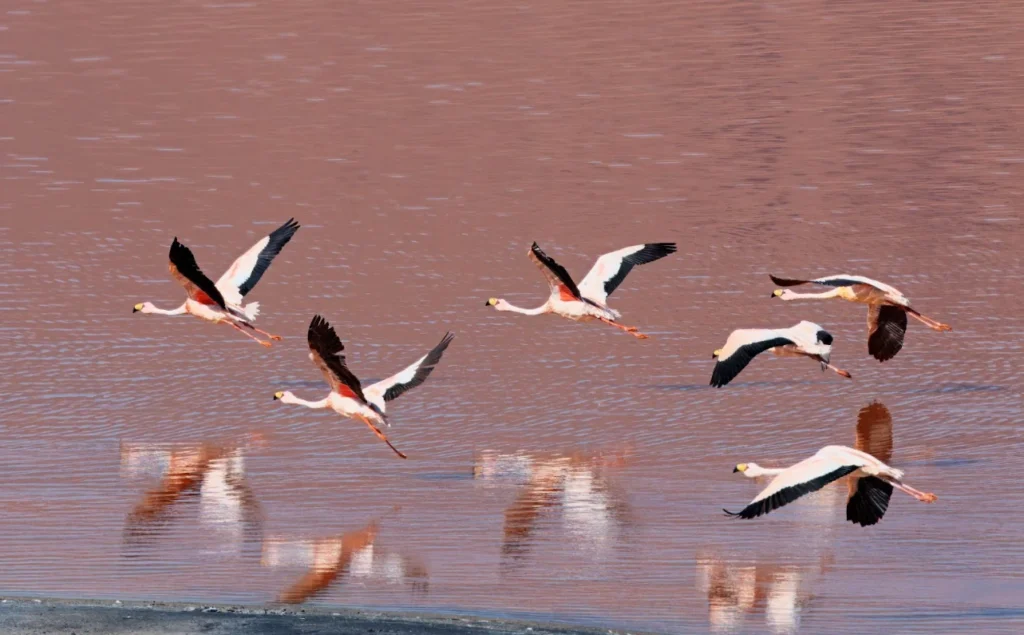
James’s Flamingo by Hugo Santa Cruz
Along the route, we may encounter wildlife such as Common Mountain Vizcacha, Culpeo or Andean Fox, Andean Swallow, White-browed and Ochre-naped Ground-Tyrants, Mourning Sierra Finch, Cordilleran Canastero, Brown-backed Mockingbird, and Rufous-breasted and Straight-billed Earthcreepers.
This region forms a mosaic of unique landscapes, offering surreal scenery of extraordinary beauty. In southern Bolivia, the Puna is notably drier, which explains the extensive presence of salt flats. Despite the harsh environment, bofedales and lagoons are also present and form an important part of today’s route.
Today we visit the Villa Alota bogs, where it is possible to observe species such as Puna Miner, Rufous-banded Miner, Plumbeous Sierra Finch, Red-backed Sierra Finch, Black Siskin, Greenish Yellow-Finch, and Golden-spotted Ground Dove. We then pass through the lagoons of Turquiri and Pastos Grandes, where we may find Giant Coot, Andean Avocet, Andean and James’s Flamingos, Andean Negrito, and White-winged Cinclodes.
Overnight at Laguna Hedionda.
Day 13
Laguna Colorada is one of the most important water bodies on the continent for the breeding of flamingos and many other high-Andean waterbirds. Its ecological significance and unparalleled scenic beauty are just some of the reasons why the area was declared part of the Eduardo Abaroa Andean Fauna National Reserve.
According to Andean mythology, the lake’s deep red color is the spilled blood of the gods. In reality, this striking phenomenon results from a combination of microscopic algae and mineral sediments. Pigments in the algae and other microorganisms react to intense sunlight and the lake’s high salinity, producing hues that range from brownish tones to vivid crimson.
This morning, we will explore the surroundings of this majestic lagoon in search of species such as Andean, James’s, and Chilean Flamingos, Andean Avocet, Gray-breasted Seedsnipe, and Puna Miner. We will also look for mammals including Highland Yellow-toothed Cavy, Coypu, and Culpeo. Later, we will return to Uyuni, where we may observe Lesser Rhea, Puna Yellow Finch, Black-winged Ground Dove, among others.
Overnight in Uyuni.
Day 14
Today, we visit Bolivia’s most iconic natural landmark: Salar de Uyuni. Formed by the evaporation of vast prehistoric lakes, it is now the largest salt flat in the world, covering approximately 1,060,000 hectares (about 2.6 million acres).
This immense white expanse holds fascinating geological features. In some areas, the salt crust reaches depths of up to 120 meters, made up of overlapping layers of brine and ancient lake sediments. Across its 150-kilometer width, the elevation varies by barely 40 centimeters, making it the flattest place on Earth.
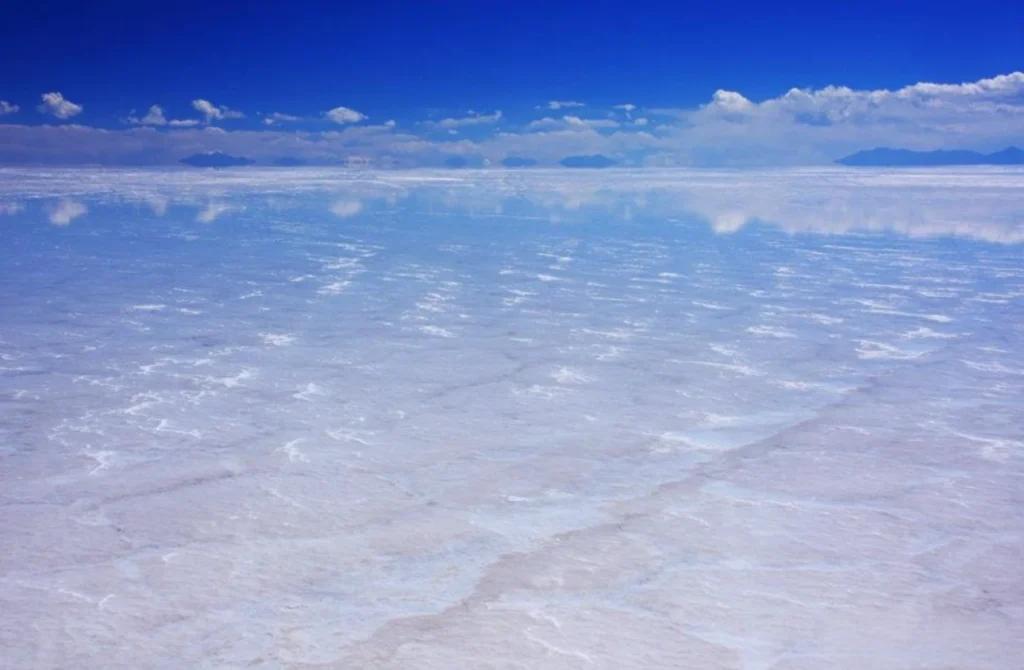
Uyuni Salt Flat by Hugo Santa Cruz
The salar also contains the world’s largest known lithium reserves, although extraction remains difficult due to the scarcity of water. In this high-altitude desert ecosystem, water is extremely limited, with annual rainfall barely exceeding 100 mm, making it a fragile and non-renewable resource.
Scattered across this “sea of salt” are around 80 islands and rocky outcrops that rise from the dazzling white surface. These isolated habitats shelter surprising life, including ancient giant cacti such as Echinopsis atacamensis and high-Andean hummingbirds like the Andean Hillstar.
We will spend the day exploring one of the most extraordinary landscapes of the South American Altiplano, a setting so otherworldly that it served as the backdrop for the planet Crait in Star Wars: Episode VIII – The Last Jedi.
Overnight in Uyuni.
Day 15
After an unforgettable experience in one of the world’s most extraordinary destinations, we continue our journey to the “City of the Sky,” La Paz. This morning we fly to El Alto, the high-altitude city that borders La Paz on the Altiplano.
El Alto stretches across the vast high plains, but as we descend into the deep valley where La Paz lies, the landscape changes dramatically. Dominating the skyline is the majestic Illimani Mountain, its snow-capped summit rising to nearly 21,325 feet above sea level—an unforgettable sight.
Although not Bolivia’s constitutional capital, La Paz serves as the seat of government, home to the Executive and Legislative branches. It is a dynamic, vibrant city where culture is expressed through art, cuisine, traditional dress, and everyday life.
We will explore the city from above aboard its impressive cable car system, visiting its most emblematic landmarks, including Plaza Murillo, Calle Jaén, and the Witches’ Street.
Overnight in La Paz.
Day 16
In the morning, our journey takes us across the Altiplano, over the mountains of the Cordillera Real in the Andes, and toward the Sorata Valley, where — with some luck — we may spot the endemics Black-hooded Sunbeam and Berlepsch’s Canastero, two of the day’s most notable species.
We then continue to Lake Titicaca, world-renowned for both its immense size and its high elevation of 12,500 ft asl. Here, a small traditional boat will be waiting to take us on a trip in search of the lake’s namesake species — the Titicaca Grebe. We’ll slowly navigate through the reeds until we reach a scenic viewpoint in the middle of the water — an excellent opportunity for photographers, as some species allow for remarkably close encounters.
Overnight at the Ritz Hotel, La Paz.
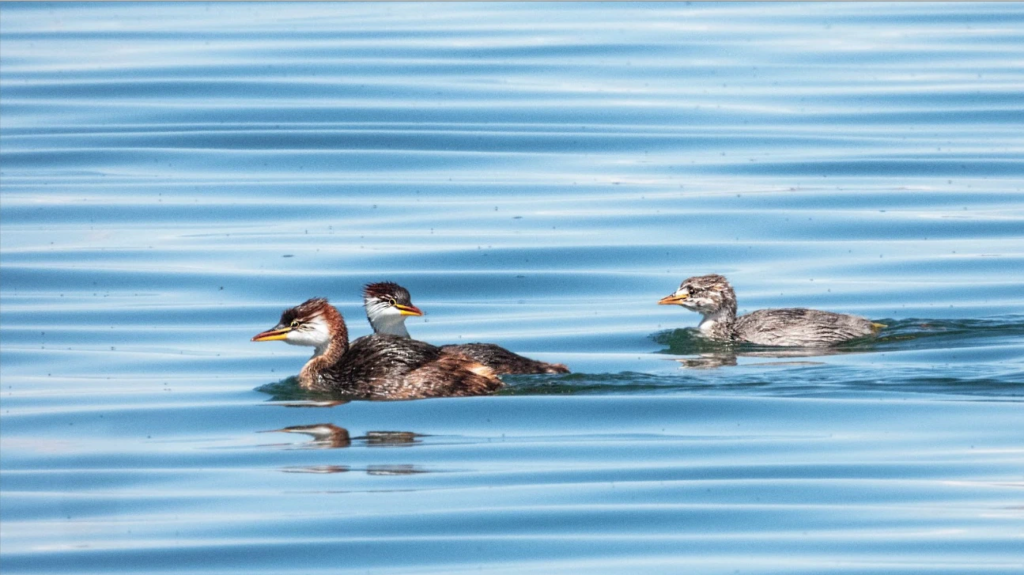
Titicaca Grebe by Hugo Santa Cruz
Day 17
We begin our birdwatching at 15,400 ft asl, in the frigid climate of the Humid Puna, at the entrance to Cotapata National Park. During the first part of the morning, we’ll explore wetlands, lagoons, and native shrublands that provide habitat for several bird species specially adapted to the high elevations of the magical Andes. At this elevation it´s possible to find Giant Coot, Rufous-bellied Seedsnipe, Slender-billed Miner, White-fronted, Cinnamon-bellied Ground Tyrant, Glacier Finch, and Plumbeus Sierra-Finch.
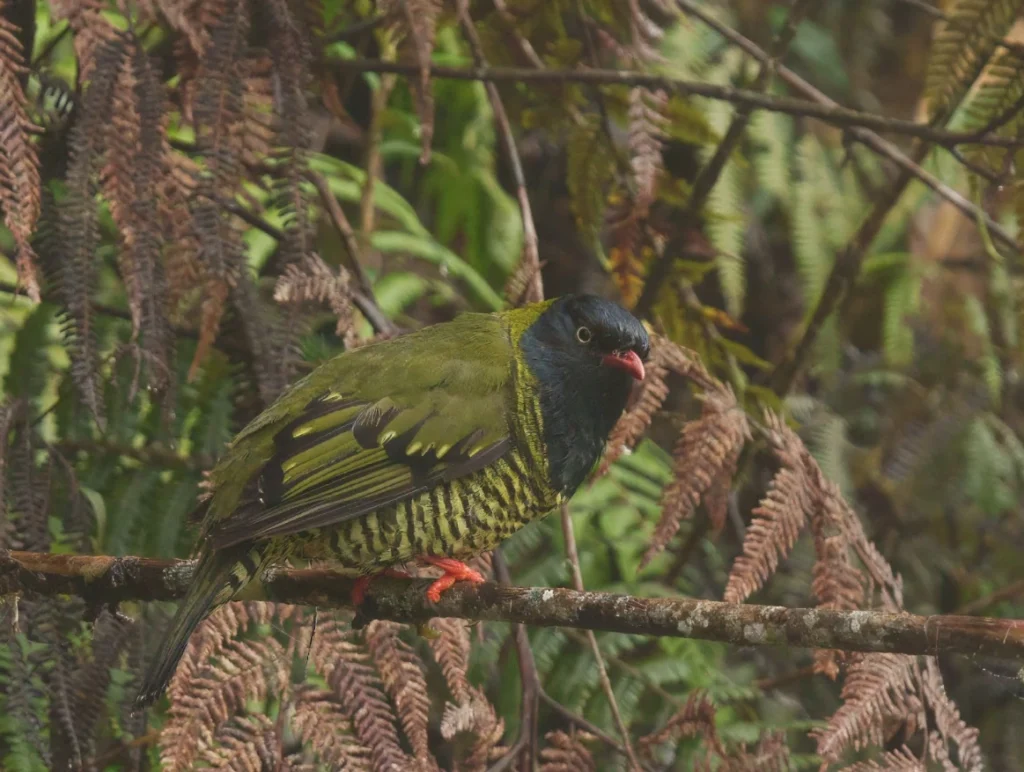
Barred Fruiteater by Hugo Santa Cruz
Later, we descend into a completely different landscape. In less than 20 km, we reach the spectacular “Death Road” — a narrow mountain route that drops dramatically to 3,950 ft asl in just 30 km. The name dates back to the 1990s, when, before the construction of the new highway to Coroico, this road held the highest annual car accident fatality rate in the world.
In only a few kilometers, we’ll pass from the thick fog of the cloud forest to the warm rainforests of the park, part of the Northern Yungas of La Paz.
In the Yungas we could find several bird species like Great Sapphirewing, Long-tailed Sylph, Blue-mantled Thornbill, Montane Foliage-gleaner, Fulvous Wren, Andean Solitaire, White-banded Tyrannulet, Brown-backed Chat-Tyrant, White-browed Conebill, Hazel-fronted Pygmy-Tyrant, Scimitar-winged Piha, Diadamed Tapaculo, Orange-browed, Black-eared, and Three-striped Hemispinguses, Golden-collared Tanager, Orange-bellied Euphonia, Swallow Tanager, and Citrine Warbler.
Overnight in La Paz.
Day 18
Transfers to El Alto Airport according to the different schedules.
End of our services.
Thank you for traveling with us.
Overnight not included.
EXTENSION TO THE AMAZON
Day 18
We depart from La Paz on an early-morning flight to Rurrenabaque, where we will be met and transferred by boat to Madidi Jungle Lodge.
Rurrenabaque is considered the ecotourism capital of Bolivia and serves as the main gateway to several protected areas, most notably Madidi National Park, where is our lodge.
En route, we will explore the Beni and Tuhichi rivers. We have a six-hour trip by boat before getting to the lodge, where we could find some birds like Red-and-green and Chestnut-fronted Macaws; Black-tailed Trogon; and Black-capped Donacobius, as well as Black Caiman and Greater Capybara.
Overnight at Madidi Jungle Lodge, Madidi National Park.
Day 19 & 20
We wake to the deep, resonant calls of howler monkeys in the heart of Madidi National Park. Madidi Jungle Ecolodge is a community-run lodge managed by the Indigenous Uchupiamona people, expert stewards of the Amazon Rainforest. They will guide us through unforgettable experiences, revealing the park’s extraordinary biodiversity while introducing us to their rich local cuisine and traditions.
With 1,028 confirmed bird species, Madidi is officially the most bird-diverse national park in the world.
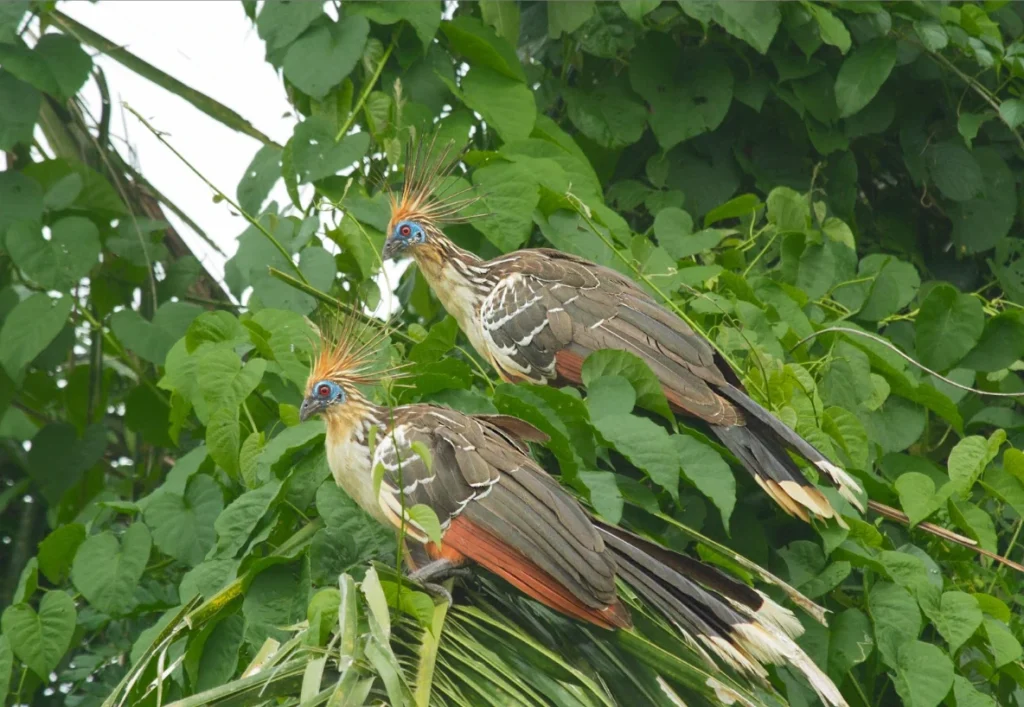
Hoatzin by Hugo Santa Cruz
Around the Chalalán area, notable species include Hoatzin, Ringed Woodpecker, Black and Red-throated Caracaras, White-necked Puffbird, Black-faced and Chestnut-tailed Antbirds, Spix’s Guan, Rufous-breasted Hermit, Razor-billed Curassow, Agami Heron, White-throated Toucan, Cobalt-winged Parakeet, White-fronted Nunbird, Fasciated Antshrike, Round-tailed and Blue-capped Manakins, Crested Owl, Curl-crested Aracari, Chestnut-capped Puffbird, and many more.
The park is equally important for its non-avian wildlife. Notable mammals and reptiles include the Andean Bear, Jaguar, Giant River Otter, Marsh Deer, Black-faced Spider Monkey, Gray Woolly Monkey, the park-endemic Madidi Titi Monkey, and the impressive Black Caiman, among many others.
Madidi Jungle is one of the finest gateways to this protected area. From here, it is possible to explore more than 50 kilometers of forest trails and navigate the calm waters of a lake, while learning firsthand about Uchupiamona culture and their deep connection to the forest.
For two full days, we will travel across the lands and waters of a culture that has coexisted with nature for centuries. Guided by local experts born and raised in the rainforest, we will discover the subtle sounds, movements, and intricate details that bring this remarkable ecosystem to life.
Day 21
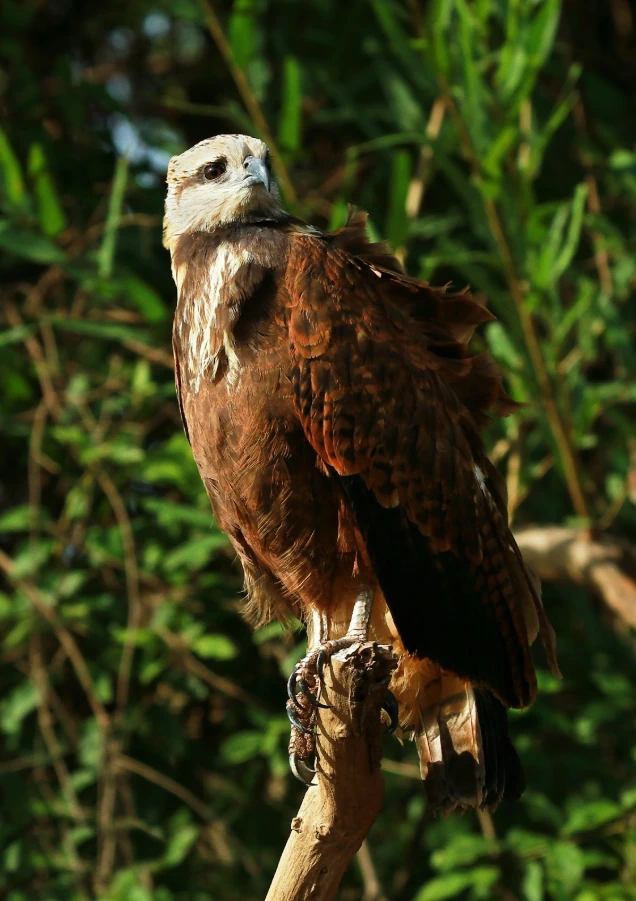
Black-collared Hawk by Hugo Santa Cruz
Today we return to Rurrenabaque, once again navigating the Tuichi and Beni rivers. The boat journey back is much shorter this time, as we travel downstream with the help of the current.
In the afternoon, we continue to one of Bolivia’s most scenically beautiful reserves: the Pampas del Yacuma Nature Reserve. This reserve lies along the Yacuma River, very different from the rivers we have already explored. From the air, its waters appear almost black; in reality, they are tea-colored. The river originates in the savanna and gradually accumulates organic matter, which gives it this distinctive hue.
To reach our lodge, we travel approximately two hours by vehicle from Rurrenabaque, followed by a 20-minute boat ride from Santa Rosa de Yacuma.
Overnight in Pampas del Yacuma Nature Reserve.
Day 22
Today is dedicated to exploring the Yacuma River, renowned for its extraordinary abundance of wildlife. Highlights include Southern Spectacled Caiman, Black Caiman, Amazon River Dolphin, Capybara, Black-capped (Bolivian) Squirrel Monkey, Guianan Brown Capuchin, Bolivian Red Howler, Hoatzin, Black-collared Hawk, Red-capped Cardinal, Ringed Kingfisher, Anhinga, and many more.
Despite the relatively short distance between Parque Nacional Madidi and the Área Protegida Pampas del Yacuma, the landscapes differ dramatically, as they belong to distinct ecoregions. The former lies within the Amazon Forest, while the latter is part of the seasonally flooded savanna.
Wildlife viewing along the Yacuma River is remarkably easy, offering exceptional opportunities for photographers to capture close-up images of an impressive diversity of birds, mammals, and reptiles.
Overnight in Rurrenabaque.
Day 23
In the morning, we fly back to La Paz. In the afternoon, we visit the Auquisamaña Reserve, located in the valleys surrounding the city, where we may observe species such as Andean Swift, Red-tailed Comet, Giant Hummingbird, Rock Earthcreeper, Plain-mantled Tit-Spinetail, Streak-fronted Thornbird, White-browed Chat-Tyrant, Brown-backed Mockingbird, and Greenish Yellow-Finch.
In the evening, we gather for a farewell dinner, reminiscing about the highlights of our Bolivian adventure.
Overnight in La Paz.
Day 24
Transfers to the airport according to each passenger’s flight schedule. End of our services.
Thank you for traveling with us.
No overnight accommodation included.