
8 Days - Blue-throated Macaw Quest & Madidi National Park Birding
Exploring Savannas and Forests in the Amazon Basin
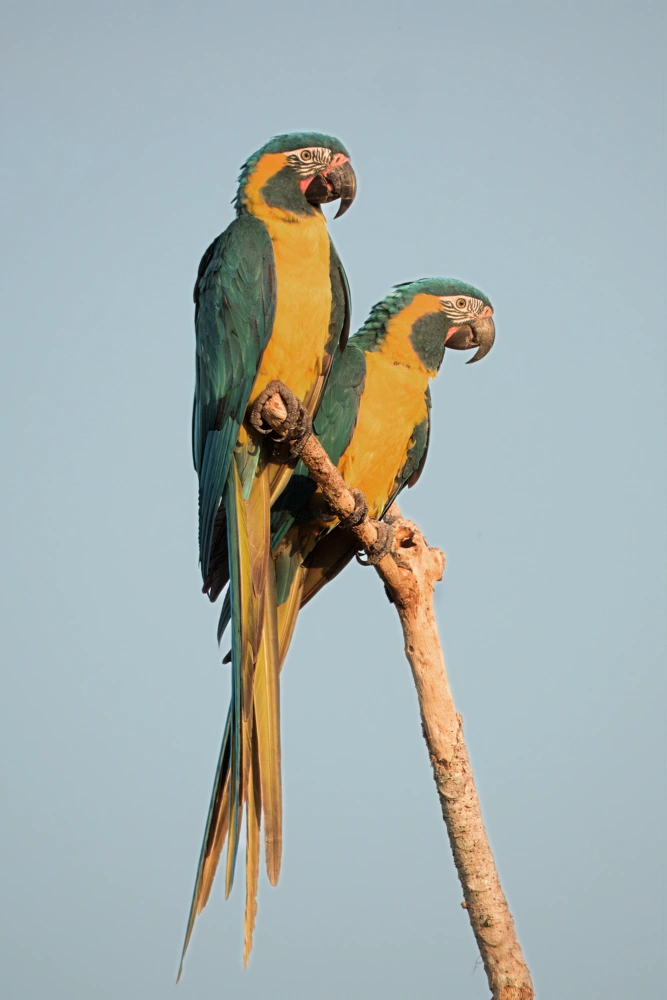
Blue-throated Macaw by Hugo Santa Cruz
This tour combines some of the finest birding hotspots in the Bolivian lowlands, spanning the ecoregions of Seasonally Flooded Savannas and the Andean foothills between the Tropical Andes and the Amazon Forest.
The main goal of the trip is to visit Madidi National Park, a very remote area and one of the world’s premier birding destinations. On the long journey to reach this region, we take advantage of the route through the savannas to search for one of Bolivia’s most emblematic species: the endemic Blue-throated Macaw.
To find this macaw, we visit the Gran Moxos Natural Reserve, an area dominated by cattle ranches, native grasslands, forest islands, and small lagoons. The protected area works in close collaboration with local ranches and NGOs, which carry out a variety of conservation actions focused on this flagship species.
After our savanna adventure, we head to what can truly be called the world’s top national park for bird diversity.
Madidi National Park, with 1,028 confirmed bird species, is officially the national park with the highest bird diversity in the world. This extraordinary richness is the result of the park’s remarkable range of ecosystems. From snow-capped peaks rising to 6,000 m a.s.l. to lush lowland rainforests at 400 m a.s.l., Madidi truly has it all: high Andean wetlands and grasslands, dry forests, mountain savannas, montane forests, Amazonian rainforests, flooded savannas, and much more.
Madidi is also of outstanding importance for non-avian wildlife. Notable species include Andean Bear, Jaguar, Giant River Otter, Marsh Deer, Black-faced Spider Monkey, Gray Woolly Monkey, the park-endemic Madidi Titi Monkey, and the impressive Black Caiman, among many others.
Exploring all of Madidi’s life zones would take months. Therefore, to obtain a representative sample of the park’s extraordinary diversity, we focus on Sadiri Lodge, the birding hotspot with the highest number of recorded bird species in Bolivia, according to eBird.
We invite you to join us on this exceptional journey through Bolivia’s most diverse landscapes, in search of iconic species and some of the richest birdlife on the planet.
Trip Summary
| Blue-throated Macaw & Madidi National Park – 8FD/9N | |||
| Day # | Itinerary | Remarks | Overnight |
| 0 | Arrival to Santa Cruz City | Transfers. Welcome dinner. (D) | Santa Cruz |
| 1 | Birding around Trinidad | Flight Santa Cruz to Trinidad (B,L,D) | Trinidad |
| 2 | Birding at Gran Moxos Reserve, looking for Blue-throated Macaw | Long drive today (B,L,D) | Trinidad |
| 3 | Transfer Trinidad to Rurrenabaque | Long drive today with roadside birding stops (B,L,D) | Rurrenabaque |
| 4 | Get to Sadiri Lodge | Flight La Paz to Rurrenabaque (B,L,D) | Madidi National Park |
| 5 | Birding around the lodge | (B,L,D) | Madidi National Park |
| 6 | Birding on the foothills | (B,L,D) | Madidi National Park |
| 7 | Birding on the Amazon plains | (B,L,D) | Madidi National Park |
| 8 | Return to Santa Cruz | Flight Trinidad to Santa Cruz (B,L,D) | Santa Cruz |
| 0 | Transfers to airport. | End of our services. (B) | Not included |
Detailed Day-by-Day Itinerary
Day 1
We begin the day birding around Viru Viru Airport and its surroundings before boarding our flight to Trinidad. The airport area is characterized by extensive semi-urban savannas that feature specialties of the Chiquitanía grassland ecosystem.
Trinidad is a city located at just 520 ft asl, in a very humid region surrounded by countless rivers and lakes. It lies within the seasonally flooded savannas of the Amazon Basin.
In the afternoon, we head to Puerto Ballivián, on the banks of the Río Ibare, part of the Ibare–Mamoré Local Protected Area. Here, we’ll walk through a beautiful gallery forest, hoping to encounter not only birds but also several species of monkeys.
Targets around Santa Cruz Airport: Greater Rhea, Red-winged Tinamou, Small-billed Tinamou, White-bellied Nothura, Red-legged Seriema, Long-winged Harrier, Burrowing Owl, Campo Flicker, Chopi Blackbird, and White-browed Blackbird.
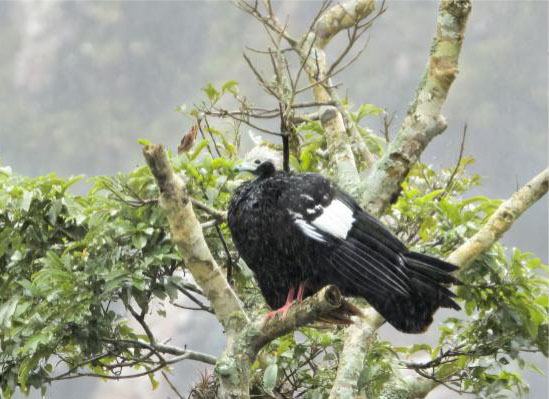
White-throated Pipin-Guan by Hugo Santa Cruz
At Puerto Ballivián: White-throated Piping-Guan, Glittering-throated Emerald, Red-and-green Macaw, Great Antshrike, Bolivian Slaty Antshrike, Dull-capped Attila, Plain Tyrannulet, and Velvet-fronted Grackle.
Mammals: Bolivian Squirrel, Southern Amazon Squirrel, Brown Agouti, Black-capped Squirrel Monkey, Guianan Brown Capuchin, and Bolivian Red Howler.
Overnight in Trinidad.
Day 2
Today, we visit the Gran Mojos Nature Reserve, an immense savanna dotted with countless lagoons and palm woodland islands teeming with life. The reserve lies about two hours from Trinidad.
Our main goal today is to locate the endemic and Critically Endangered Blue-throated Macaw. While searching for this spectacular species, we can also expect to encounter many other birds, as well as some mammals.
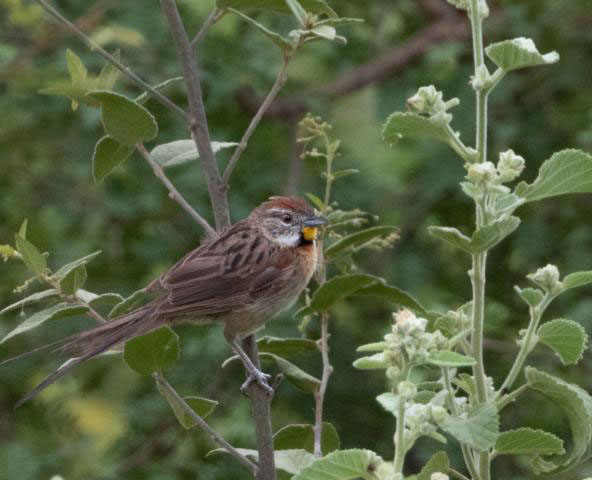
Chotoy Spinetail by Hugo Santa Cruz
Targets: Greater Rhea, Undulated Tinamou, Southern Screamer, Orinoco Goose, Greater Thornbird, Red-crested Cardinal, Speckled Chachalaca, Grey-fronted Dove, Blue-and-yellow, Red-and-green, Chestnut-fronted, and Golden-collared Macaws; Dusky-headed, Yellow-chevroned, and Peach-fronted Parakeets; White, Pale-crested, and Crimson-crested Woodpeckers; Campo Flicker, Rufous Cacholote, Grey Monjita, White Monjita, Narrow-billed Woodcreeper, Chotoy Spinetail, and Black-capped Donacobius.
Mammals: Bolivian Squirrel, Southern Amazon Squirrel, Brown Agouti, Black-capped Squirrel Monkey, Guianan Brown Capuchin, and Bolivian Red Howler.
Overnight in Trinidad.
Day 3
Today is a long travel day across the Llanos de Moxos, within the Seasonally Flooded Savanna. We transfer to Rurrenabaque, making numerous intermediate stops at different points of interest for birdwatching.
During the journey, many aquatic species can be observed in lagoons and across the flooded savanna. Parrots and macaws are especially prominent, as are species typical of open grasslands.
We arrive in Rurrenabaque in the late afternoon.
Overnight in Rurrenabaque.
Targets: Orinoco Goose, White-throated Pipin-Guan, Capped Heron, Rufous-tailed Jacamar, Chestnut-eared Aracari, Toco Toucan, Blue-and-yellow, and Chestnut-fronted Macaws, Greater Thornbird, Black-capped Donacobius, Fawn-breasted Wren, Russet-backed Oropendola, Velvet-fronted Grackle, Scarlet-headed Blackbird, Unicolored Blackbird, and Great-billed Seed-Finch.
Day 4
Early in the morning, we will be met and transferred by road to Sadiri Lodge.
Rurrenabaque is considered the ecotourism capital of Bolivia and serves as the main gateway to several protected areas, most notably Madidi National Park.
En route, we will explore the seasonally flooded savanna, a mosaic of habitats including woodlands, grasslands, swamps, and palm forests. The entire morning will be devoted to birding, focusing on ecosystem specialties, before enjoying lunch upon arrival at Sadiri Lodge.
Target on the route: Sungrebe; Red-and-green, Chestnut-fronted, and Red-bellied Macaws; Black-tailed Trogon; Point-tailed Palmcreeper; Black-capped Donacobius; Fork-tailed Palm Swift; Sulphur-bellied Flycatcher; Violaceous Jay; White-browed Meadowlark; and Velvet-fronted Grackle.
Overnight: Sadiri Lodge, Madidi National Park.
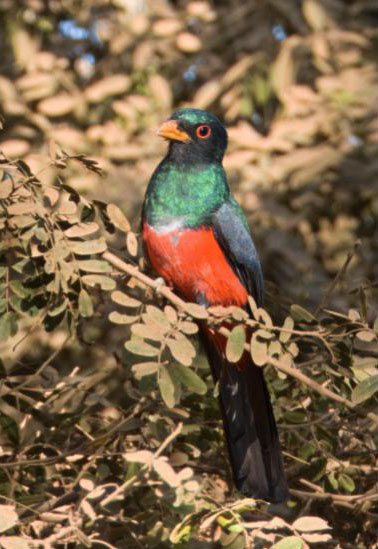
Black-tailed Trogon by Hugo Santa Cruz
Days 5, 6 & 7
Sadiri Lodge is hidden within the rainforest at the foothills of the northern Bolivian tropical Andes, at 620 m a.s.l. More than 570 bird species have been recorded here on eBird, placing Sadiri among the most species-rich birding hotspots in the world.
In addition to foothill habitats, true Amazonian lowland forests can be reached just a few kilometers from the lodge, below 500 m a.s.l., greatly increasing our chances of encountering a wide range of Amazonian forest species.
The name Sadiri comes from the Tacana word S’hadiri, meaning “the old resting place.” The lodge is managed by Tacana families from the San José de Uchupiamonas community. Our visit directly benefits both the local community and the conservation of this protected area.
Overnight in Trinidad.
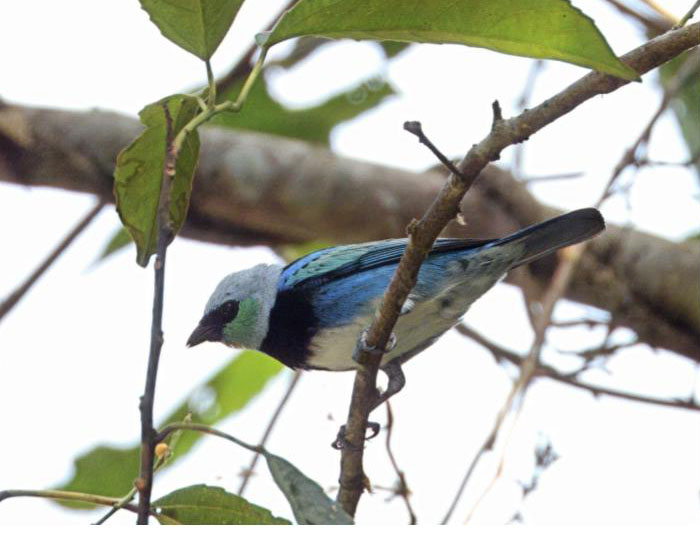
Masked Tanager by Hugo Santa Cruz
We spend three full days birding this exceptional hotspot.
Target species: Rufous-vented Ground-Cuckoo; White Hawk; Subtropical and Amazonian Pygmy-Owls; Great-billed and White-browed Hermits; Gray-breasted Sabrewing; Violet-headed, Many-spotted, and Violet-fronted Hummingbirds; Black-eared Fairy; Amethyst Woodstar; Black-tailed Trogon;Lemon-throated and Gilded Barbets; Curl-crested Aracari; Bar-breasted Piculet; White-throated Woodpecker; Blue-and-yellow, Red-and-green, Chestnut-fronted, and Military Macaws; Bolivian Recurvebill (E);
Rose-fronted Parakeet; Rufous-tailed and Chestnut-winged Foliage-gleaners; Sharp-tailed Streamcreeper; Purple-throated Cotinga; Gray-throated Leaftosser; Tschudi’s, Elegant, and Inambari Woodcreepers; Western Striolated Puffbird; Brownish-headed and Hairy-crested Antbirds; Yungas, Red-billed, and Cinnamon-faced Tyrannulets; Spectacled Bristle-Tyrant; White-crested Spadebill; Dusky-tailed Flatbill; Round-tailed Manakin; Sharpbill; Cinereous Mourner; Chestnut-crowned and Pink-throated Becards; Slaty-capped Shrike-Vireo; Golden-rumped, Purple-throated, Golden-bellied, White-vented, Thick-billed, Bronze-green, and Rufous-bellied Euphonias; Cuzco Warbler; Pectoral Sparrow; White-winged Shrike-Tanager; Yellow-crested, Turquoise, Paradise, Green-and-gold, Yellow-bellied, Spotted, Masked, and Olive Tanagers; Yellow-shouldered and Rothschild’s Grosbeaks.
Overnight: Sadiri Lodge, Madidi National Park.
Day 8
Return to Santa Cruz. We travel by road back to Trinidad, where we take a flight to Santa Cruz. This is mainly a transfer day; however, short stops will be made along the way to stretch our legs and enjoy some opportunistic birding.
Upon arrival in Santa Cruz, vehicles will be waiting to transfer us to your hotel.
Overnight not included.